Wednesday, 19 February 2014

January 2014 - Geelong to Port Elliot

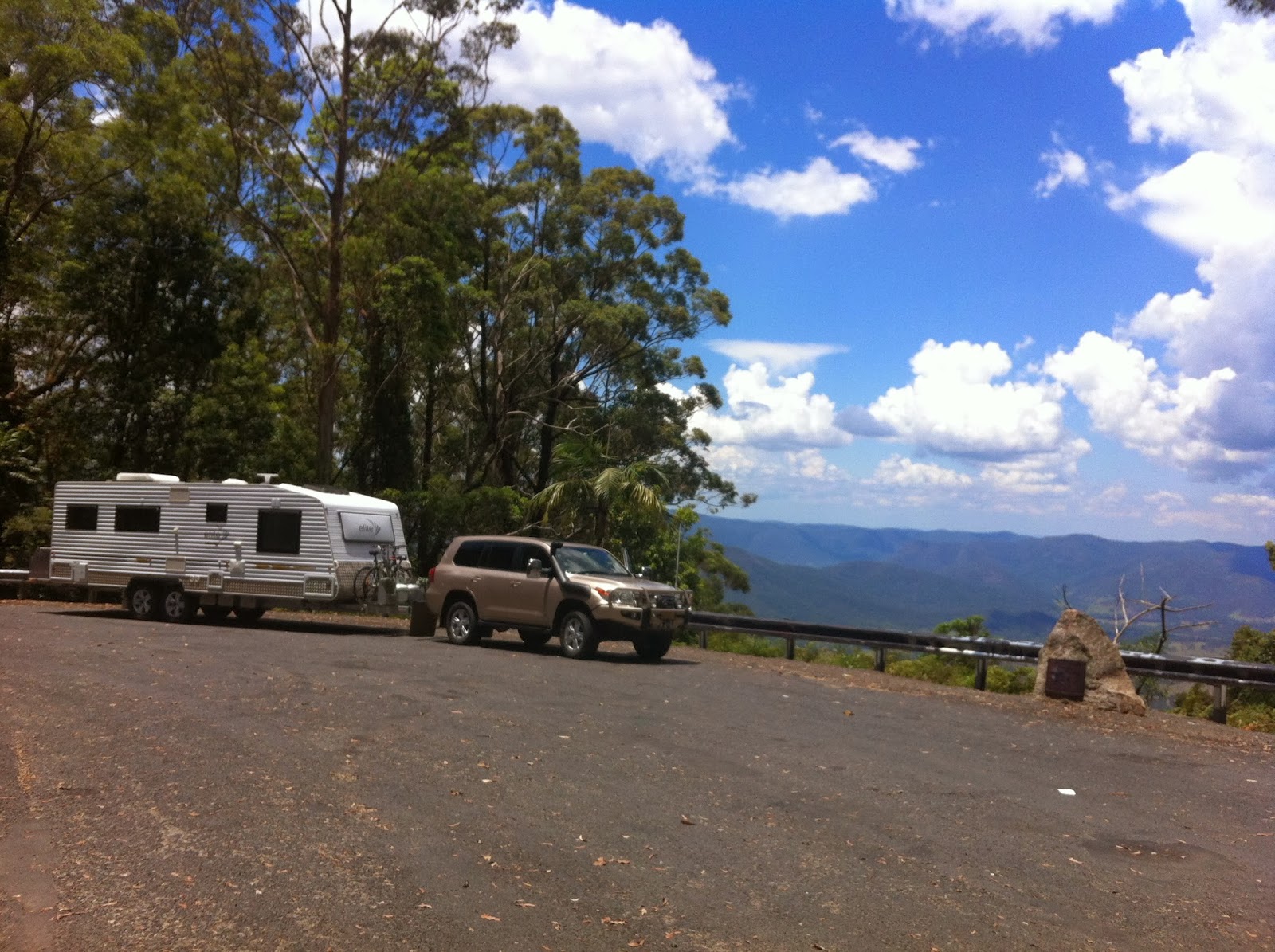
Setting off again, we spent the Australia Day long weekend at lake Burrumbeet just west of Ballarat.

This caravan park has been under new management for the past 3 years and the new management have worked hard to clean out a lot of the old permanents and make the place somewhere nice to stay.  The lake was closed to boating due to a blue/green algae bloom as a result of the extremely hot weather of the previous week.  We spent a lot of time fishing which resulted in one eel and numerous carp, some of which would have been around 5 pound.

Mannum in South Australia is on the Murray river about 60 kilometres upstream from Tailem Bend.  Last time we were through here on our way to Renmark about 5 years ago, we saw a sign saying that Mannum is known as the birthplace of the Murray river paddle steamers, so a visit back here was high on my bucket list.
We took the short cut from Murray Bridge up the east side of the river which meant that we had to cross the river on the ferry once we got to Mannum.  There are 2 ferries that operate at this crossing with one of them operating 24/7, the latter being able to carry a fully loaded truck. 
We stayed in the Mannum Caravan Park which is just adjacent to where the ferry lands.  Lovely caravan park right on the river and very close to the main street for shopping.
We got the boat into the river and tried out the new fish finder that we got for Christmas. 
I couldn't believe my eyes at the amount of fish we saw as we motored slowly along.  This was backed up by the amount of fish we saw jumping and near the surface.  I have been told not to get too excited about fish jumping, as native fish in the Murray don’t jump, so what we were seeing are carp.  This was backed up by another big carp that we caught.
The first few days in Mannum were over 40 degrees so we didn't venture too far from the air conditioner in the caravan but when it cooled off a bit, we visited the Mannum Dock Museum which is the home of the fully restored Paddle Steamer Marion. 
PS Marion was built in 1897 and is one of the last operational, heritage, steam driven, wood fired, overnight passenger carrying side paddle steamers in the world. 
The Marion started work as a barge and was fitted with a superstructure and steam engine in 1900. The engine was built by Marshall & Sons of Gainsborough, England and it is still the same engine fitted to the Marion today.  The Marion had various owners and ports along the Murray during her working life, the last owner being Murray Shipping Limited. In December 1934 she left Morgan for the first of what became regular Summer cruises. She went upstream as far as Renmark, then down to Goolwa and back to Morgan. After Murray Shipping Limited went into liquidation in 1952, Marion was sold a number of times and spent some years as a floating boarding house in Berri. In 1963, Marion was bought by the National Trust to be used as a memorial to the River Navigation Era. She sailed down river to Mannum under her own steam on what was then thought to be her last voyage. 
For over thirty years Marion rested in the historic Randell Dry Dock at Mannum, where the local branch of the National Trust maintained her as a static museum. In 1989 the Mannum community and Council decided that the best way to preserve the Marion for future generations was to conserve and restore the boat to being fully operational. The Mannum Dock Museum was appointed to manage and develop the facilities and opportunities of PS Marion and Randell Dry Dock as the core of the Mannum Dock Museum of River History.
Major restoration work was undertaken with great love and attention to detail. This work has involved many tens of thousands of volunteer man hours. The superstructure has been restored to what it was in her heyday as a passenger steamer, with cabins, lounges, dining room, galley and bathrooms. Marion was recommissioned in November 1994 and still takes day and overnight cruises to this day.

While the PS Marion has been fully rebuilt and is still operational, the real history of paddle steamers on the Murray River lies inside the Mannum museum.
Mannum’s early history developed around the personal desire of William Randell to operate a steam boat on the River Murray.  
Randell and his 2 brothers carefully selected redgum logs from  around Gumeracha and dragged them by bullock team to the spot where they were cut into planks by pitsaw.  The hull was prefabricated and then carted 48 kilometres across the hills and river flats to the river where it was put together .  
In late 1852, the Mary Ann was launched and the engine was fitted.  It was a 7 to 8 horse power beam engine with 10” cylinders.  The boiler which is the only surviving relic of the Mary Ann was oblong in shape and proved to be very dangerous.
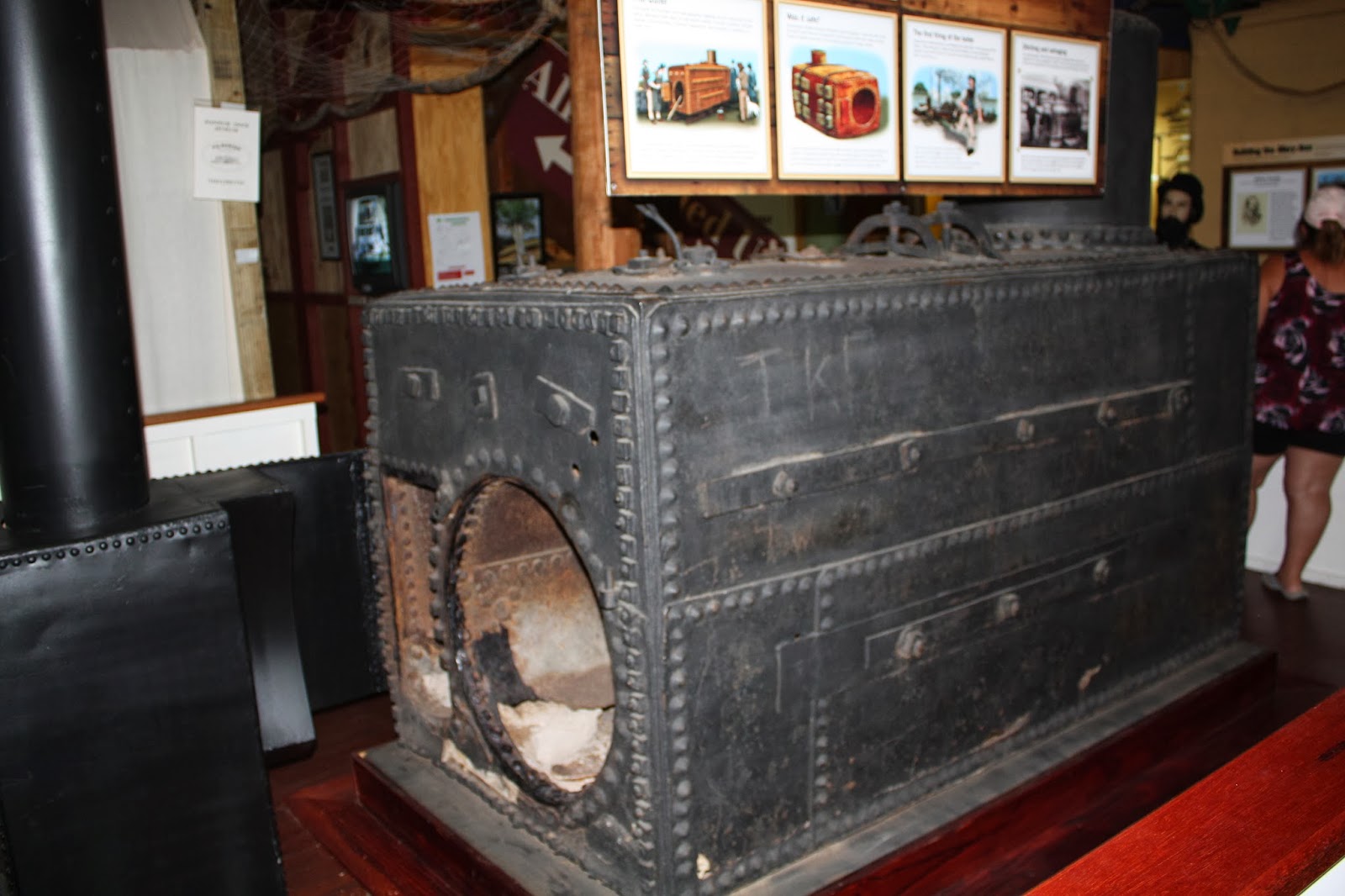
It had to be reinforced with chains and wedges to stop it from blowing apart.  Some say it was built this way as the engineer had no idea of what he was doing, but more likely the engineer didn’t have access to steel suitable for rolling into a cylindrical shape.  

In 1853 Randell launched his Paddle Steamer “Mary Ann” at Noa-No landing, 5 kilometres upstream from the present site of Mannum.
This was the first paddle steamer on the River Murray in South Australia and it pioneered the navigation route to the stations along the Murray, Murrumbidgee and the Darling Rivers, and in the early years, the gold fields of Victoria.
William Randell’s family were pastoralists in the Mannum area where they grew wheat and operated a flour mill.  The Mary Ann was used to deliver flour along the river as well and as far away as the Victorian gold fields.  Randell was the first to navigate the river from Swan Hill to Echuca and later on as far up as Albury.
Boys will be boys and the competition to navigate the river upstream from Mannum was on.  The following photos taken of pictures in the Mannum Museum depicts the story of the race between William Randell on the Mary Ann and Captain Cadell on the Lady Augusta.


The river trade opened up a transport network all along the river system, and in 1877 David and John Shearer established a blacksmith and farm implement business in Mannum and used the river system to market and distribute their goods.  This company which is now known as Howard Bagshaw is still operational in Mannum today and is the mainstay of Mannum’s economy.
The museum also houses other interesting things from around the area.  This fish fossil found at Overland Corner in South Australia is said to be between 15 and 20 million years old.

 
This photo taken of a Murray Cod which was believed to be between 75 and 112 years old measured over 6 foot in length
The replica wheel house of the Paddle Steamer Emily Jane is an interactive exhibit which gives visitors the opportunity to “captain” a paddle steamer and get the feel of what it is like to navigate your way along the great Murray River.


This museum presents river history at its best and it is a credit to the volunteers that put so much effort into it.
Where there are rivers there are floods and Mannum is no exception.  The last “1 in 100 year flood” through here was in 1956 when the river peaked at 5.1 metres or 16.7 feet.  
1956 flood level shown by the dark grey paint around the wall
There is a high level mark painted inside the visitors information centre which highlights just how deep the water was.  Back in 1956, this was the mechanics workshop so it is easy to imagine the huge losses that the town would have suffered during that period.  The whole bottom floor of the Pretoria Hotel was flooded but they kept trading by removing some of the hand rail from around the second story balcony so the boats could tie up and people could still come in for a drink.  
This photo is of a painting in the Mannum Museum depicting the main street at the height of that flood.
 The Murray Princess is another beautiful old stern wheeler that operates 3, 4, 5 and 7 night cruises from Mary Ann park just off the main street.  
This is a 1,500 tonne ship which is the biggest ship operating on inland waters in the southern hemisphere.  It can carry 120 passengers in comfort and has a draft of just 1.2 metres.


We have been through Tailem Bend many times and have seen the signs for Old Tailem Town on the Adelaide side of town so we decided to have a look.  We were lucky enough to have an half hour chat with Peter, the owner who grew up on this site and had the grand plan to collect all this old stuff and display it all in one place. He started 30 years ago and is still adding more every year. It would be great to see a lot more of the machinery restored and on display instead of just seeing it in sheds. We were disappointed that the 3 big machinery sheds where all the old working engines are stored were not open on the day we visited. Apparently these displays belong to somebody else and they are only open when that person is there. All in all it was a good experience, but I think that a lot of the old buildings will need some maintenance shortly if this attraction wants to continue getting visitors.
All the shops and commercial buildings like the garages, boat shed, picture theaters and hotel are full of authentic artifacts from 50 or 60 years ago, sadly we could remember most of these things from our youth.

About 100 kilometres up the river from Mannum is the town of Blanchetown which is home to lock 1. Locks and weirs on the Murray River were built to hold the water level back and raise the level to enable water to flow into irrigation channels.
We stayed at Blanchetown about 6 years ago and remembered a fantastic chicken parmy we had at the local pub. We went back to the same pub for lunch and yes, the parmy was still just as good.
During our travels in the past, we have covered almost the full length of the Murray River from the Snowy Mountains on the north west border between Victoria and NSW and now this trip takes us to Lake Alexandrina, where this mighty river meets the sea after winding for 2530 kilometres from its beginning.
Lake Alexandrina has a surface area of 64,900 hectares. At the southern end of the lake there are a series of about 20 islands, the biggest is Hindmarsh Island which is about 4,716 hectares in size. This island is reputed to be the largest island in the world with salt water on one side and fresh water on the other. Dairy Farming used to be big on this island but since the drought, all the dairies have closed down because of the lack of water. There is now only 1 farm on the island with beef cattle and sheep. A lot of the areas on the island that are near the coast have man made canals and big housing developments have shot up around these canals.
Goolwa is on the Fleurieu Peninsular and about 10 kilometres from Pullen Spit where the Murray meets the Southern Ocean. 
There is access to the Murray mouth by four wheel drive along the Sir Richard Peninsular beach from Goolwa, but the Spirit of the Coorong also operate a 2 hour cruise down the Murray, through the Goolwa Barrage, across the opening where the Murray meets the Southern Ocean and onto the Younghusband Peninsular. The 10 year drought has changed this area dramatically as there was no water flowing down the river, the Southern Ocean washed a lot of sand in through the mouth and the whole area is very shallow. Interestingly enough, the actual position of the Murray mouth has changed by 6 – 8 kilometres over the millennia, as this area is all sand and the wind and waves keep eroding the sand away. 
The Murray River meets the Southern Ocean
When the big waters come down the river, they find the easiest way to the sea which may not necessarily be the same place where the last flood waters washed through.

The waters through this area are part of the Coorong National Park, so all sorts of bird life thrive through this whole area, including birds which migrate here from colder countries to feed during their winter.
We stayed at the historic shipping town of Port Elliot right on Horseshoe Bay which is a lovely little beach just 60 metres walk out of the back of the caravan park. It’s nice to go to bed at night and hear the waves crashing on the shore.
Port Elliot is central to Victor Harbor and Goolwa which are only about 10 kilometres in either direction. 
Paddle Steamer "Oscar W" at Goolwa
Back in the early 1850’s, Port Elliot was planned to be the export shipping port for the goods coming down the Murray River by paddle steamer into Goolwa. A railway line was constructed to carry the goods the 15 or so kilometres from paddle steamer to export sailing ship. This was South Australia’s first railway venture with the line opening in 1854. Unfortunately, it soon became apparent that Port Elliot was a bad choice as a harbour. A lack of shelter for shipping and the shallow anchorage made conditions dangerous to even the smallest ships. Seven ships were wrecked between 1853 and 1864 and it was decided to relocate the port facilities to nearby Victor Harbor. Horses provided traction power until steam was introduced in 1884. Two horses often worked coupled together and were changed as necessary at intermediate stations. In 1875 records show that the railway operated 29 horses, travelling 7,000 miles per month. A typical working life for one of these horses was 14 years. 
These days this railway line is a tourist railway called The Cockle Train which skirts within 100 metres from the Southern Ocean travelling between Victor Harbor and Goolwa. During the cooler months this train is pulled by a steam locomotive, but as the fire season is in full swing, our train was pulled by a restored 1960 diesel electric rail motor.
Further down the peninsula from Port Elliot is the town of Victor Harbor. As with the other 5 harbours in South Australia, Victor Harbor is spelt without a “u” . It is surmised that this probably originated from a spelling error made by an early Surveyor General of South Australia.
With the horse drawn train line being extended into Victor Harbor from Port Elliot to transport the goods being brought down the Murray to Goolwa, more piers needed to be built for the sailing ships to dock. 
600 metres off the mainland from Victor Harbor lies Granite Island which was selected as an ideal place as it is sheltered from the Southern Ocean by a rocky outcrop. In 1867 a deputation to the Commissioner for Public Works resulted in the continuation of the original pier in a direct line to Granite Island. This extension became known as "The Causeway". The line continued onto and around the northern edge of the island to where a Working Jetty was constructed. In 1881 an additional jetty, protected by a breakwater, was built. The Screw Pile Jetty still stands today and is used by local fishing vessels and pleasure craft. 
The horse drawn tram operates as a tourist tram now days and is a pleasant way to get out to the island.
Granite Island has a small colony of Little (Fairy) Penguins which is in terrible danger of being wiped out. 

The wild penguin numbers have reduced dramatically all the way down to about 30 as a result of the New Zealand Fur Seal colonies taking over their habitat and also killing them as they return to the island. 


The island has a penguin rescue and rehabilitation centre for injured birds but government red tape will only let them have 10 at a time. Pity that red tape is stopping more of these little penguins being rehabilitated and returned to the wild, especially in light of the fact that they are in such rapid decline on Granite Island.


As with everything mechanical, maintenance needs to be done if things are going to continue to operate correctly. It is just 12 months since we picked the caravan up so I gave it it’s 12 month service. Everything is running well mechanically so a grease, wheel bearing check and brake adjustment was all it needed to prepare us for the trip across the Nullarbor. 
New anode on the right
I also changed the sacrificial magnesium rod anode in the hot water service and couldn't believe just how badly the old one had corroded as compared to the new one that I fitted. A good idea for all caravaners to keep an eye on anodes as they really do prevent a lot of corrosion problems inside the hot water system.


From here our travels take us across the Yorke Peninsular to the Copper Coast and the town of Wallaroo.

Tuesday, 21 January 2014

Christmas 2013

We had always planned to head back to Lara for a few weeks around Christmas for a catch up with family and friends.
First thing on the agenda when we arrived back in Lara was to attend our grandson Lochie’s graduation from primary school.  
All the grade 6 kids were presented with their certificates and then they entertained the crowd with their production of the musical Hairspray.  How time flies with the first of the grand children completed primary school.

Talking about time flying, Christmas seems to  come and go quicker every year and this year was certainly no exception.  We were back in Geelong for Christmas and had a lovely Christmas lunch with Karen, Harley, Lochie and Sophie at their place.  We then topped up on Christmas tea with Leann and Clayton and some of the Trotter and Jolly families at Kylies place in Avalon.  Thank God for a day of rest on boxing day and then another Christmas lunch with my family at my sister Diane's place down at Bambra. My brother Barry's son Adam had smoked up a leg of pork from a pig that Trent and Rhys prepared, and Trent cooked up some fresh scallops that he and a mate gathered fresh from the sea.  
Judy and Diane made a beautiful selection of sweets which topped the meal off very well.  Like most Aussie Christmas lunches, this one finished up in a game of backyard cricket.


The following day saw us packing the caravan again and heading off to Laanecoorie which is on the Loddon river south west of Bendigo.  
The lake is ideal for water skiing and as the temperature was up around 37 degrees, it didn't take long for Clayton to get his boat into the water and towing everybody around on the tube, we all had a great time cooling off.   
With 15 hungry mouths to feed every night, meal times became a real community effort.  Chicken schnitzels, BBQ chops, spaghetti bolognaise were the first few meals. Once we got settled into it and the weather cooled off a bit, the Oz-pig came out with the camp oven and we amazed ourselves with what could be cooked in that.  Everything from beef stew, roast pork and roast beef. Brendan decided that double recipe chocolate self saucing pudding would probably work OK in the camp oven as well.  That started it for deserts and the next night Clayton did golden syrup dumplings which worked out just as well.
Brendan's son Tyhe was telling us how he had learnt to cook pizza omelette at school so we talked him in to cooking it for breakfast.  Wow, Tyhe's pizza omelette was a great hit with everyone in our camp so it was on for breakfast again the next morning.
Leann and Judy turned their hand to pizza which Clayton cooked in the parks pizza oven, these pizzas would put Pizza Hut to shame.

With the historic town of Maldon only about 25 minutes drive away, a ride on the steam train from Maldon to Castlemaine was high on the list.  We had lunch at the take away shop in the main street of Maldon and we all voted them to be the absolute best chips that any of us had ever eaten anywhere.  They were cooked to perfection, crunchy on the outside and soft on the inside and above all not greasy.  Right next door is the Maldon home made ice creamery.  Once again, possibly the best ice cream you could have with too many flavours to choose from.  I can certainly recommend the Bailies Irish Coffee, but the choc orange, banana and strawberry also come highly recommended.  

The train departs Maldon at 2.30 pm and we sat in their refurbished first class carriage and enjoyed a coffee from the on board bar.  The trip is 18 kilometres and takes just under an hour as it is only a light gauge track so the speed limit most of the way if only 15 miles per hour.  The train stops briefly at Muckleford Station which is about half way and then it is all down hill into Castlemaine from there.  As most people would have gathered from reading our blog, I have a fascination for old steam engines, so I took the time to climb up into the driving compartment to have a look while we were waiting for the return journey.  Much to my surprise, Clayton chatted to the station master and the train driver and convinced them to let me ride back to Maldon with them in the engine.  
Well I couldn't get back on fast enough, and I spent the next hour amongst the steam and the smoke learning how a real steam engine works.  What an awesome trip and an unforgettable experience to get amongst all that steel and raw power as the J class 549 locomotive went under full steam to tow those carriages up the first 1 in 40 gradient out of Castlemaine.  We stopped again at Muckleford station on the way back, and as we were running ahead of time, the driver got off to do a "tyre check".  This gave me a chance to walk around the loco with him and of course ask many questions.  Back on board again and steamed back into Maldon.  I was surprised just how much work goes on in the driving compartment, with the  fireman trying to keep the water in the boiler at the right level, the steam pressure up around 160 psi and the right amount of fuel on the fire so there is not too much smoke but enough to keep that steam pressure up for when the driver pours on full power.  All this time the driver is busy with his levers and wheels controlling how much steam is used and how much power that steam produces in the engines all at the same time using the brakes to control the down hill speed and using that steam whistle to warn cars as they approach level crossings.  Wow, you couldn't have wiped the smile off my face nor the smell of soot off my cloths, what an experience.
Further information on J549 locomotive can be found at http://www.australiansteam.com/J549.htm

Maryborough is another country town close by and we were surprised at how big this town is.  It has all the facilities, and unlike a lot of other smaller country towns, this one seems to be thriving.  The girls had a great day shopping and away from the dust out at the lake.

We moved on from Laanecoorie to Barham and it was great to get back onto a lovely grassed site again and be so close to the Murray river .  After 2 days of cleaning out the dust from the caravan and endless loads of washing, we got the boat blown up again and into the water.  Our first trip down the river saw us land 2 good size yellow belly.  
As usual, I caught the first one but Judy trumped me again by pulling in another one half again as big as mine.  It was good to actually get amongst some eatable fish again after all the stinking carp that we caught at Laanecoorie.

One of the things that I find interesting while looking around the country are infrastructure projects that are being undertaken to either preserve or regenerate areas that have been degraded through one means or another.  The last few times we have visited Barham we have noticed some extensive earth works and bridge building just north of the town but haven't  taken the time to find out what it is all about.  
Having a bit more time now we drove in to have a look and found out that it is the Koondrook–Perricoota Forest flood enhancement project which is now complete.  This is an $80 million project to deliver environmental water to more than 17,000 hectares of forest to restore the health of the River Murray and the unique River Red Gums of that forest. This major infrastructure project, located on the River Murray between Echuca/Moama and Barham involves a series of channels and regulators built to efficiently deliver environmental water entitlements to water more than 17,000 hectares of forest.
The project has included the construction of a 3.8 kilometre inlet channel and a 43 kilometre series of levees and control regulators to enable water to be diverted into the creek system that feeds and drains the forest while protecting the surrounding farm land from artificial flooding.
Water from Torrumbarry Weir pool will be directed into natural flood runners within the 33,000 hectare forest with up to 52 per cent or 17,000 hectares of forests being able to be inundated before water is returned to the River Murray system. This enables the water to be reused for other purposes further downstream.
We met a lady in the caravan park who worked on the project as an advisor on flora and fauna and she told us how they found many aboriginal burial sites where they had to work with the local aboriginal tribal elders to ensure that these sites are preserved.  This lady is a zoologist and had nothing but good things to say about the project.  We also spoke to other locals and farmers about the project and they were very critical of all the money being spent on the project.  Like always, there are 2 sides to every story.  It must be difficult for governments to commit large amounts of money to these projects when there are so many people in need of the basics.

We drove from Barham to Swan Hill on a back road through Murrabit and Benjeroop.  We couldn’t help notice earth bund walls around a lot of the houses so I started asking some questions.  How quickly we forget things that happen.  In January 2011 there was a huge rain event as never seen before which flooded Central and North Western Victoria. 
Two weeks after that the water arrived in Benjeroop (as this photo taken from their web site shows,) as it sits on the banks of the Murray, Loddon and Little Murray rivers as well as various major creeks.  The little farming community was inundated with water and 25 homes were sitting in rancid water for so long that they became unsalvageable.  Prince William actually visited this community when he was in Australia in March 2011.  They have an excellent little website that is worth a visit to see how their community is still battling to recover.
One thing they have done is to develop an irrigation museum and have a fully rebuilt Hornsby Gas Suction engine and an irrigation pump which was first started again on the 12/12/12 which was exactly 100 years to the day that the engine first arrived in Australia.

With the weather being around 47 degrees, we took advantage of the air conditioner in the car and took a drive around Lake Boga.  
This lake was completely dry during the last drought but has recovered well with all the water that is now available for environmental flow.  The water from the rivers and channels is so expensive for the farmers to buy so a lot of them have stopped irrigating and sold their water allocations off back to the government.  This has also happened around the Benjeroop farming community where farmers have just sold their water rights and walked off the land.  The lake looks great and the ski club have taken advantage of it with a floating water park.

After a week at Barham, we traveled just 28 kilometres and moved on to Cohuana for a few days beside Gunbower Creek.  Unfortunately our luck with fishing didn’t change, but we did manage to catch a small feed of yabbies.

From Barham we headed back to Geelong to tie up a few final loose ends and then off to the west where we plan to be in Perth by September.

I have been very surprised at how many people follow us on our blog.  One of those people is Jo at Westprint in Nhill.  Westprint specialise in outback maps, books and other interesting information for the Aussie traveler.  They do a newsletter every week called the Friday Five which advertises some of the products they have for sale , but also prints stories from other travelers as well as 5 jokes at the end for a weekly laugh.  They published some of the stories from our blog in January which we were excited to see. 

To get onto their mailing list, check out their website at http://westprint.com.au/ it is an interesting read and a good laugh as well.

Thursday, 28 November 2013

November 2013 - Brisbane to Geelong

After flying back to Brisbane following the conference and awards night, we picked up the car and caravan from Gateway Airport Parking and headed to the south side of Brisbane where we stayed at Brisbane Gateway Resort.  
 We keep saying that caravan parks can't get any better, but this one is right up there with the best. Manicured gardens with palm trees giving good shade over well grassed sites.
We visited Mount Coot-Tha Botanical Gardens to see the National  Australia Remembers Freedom Wall.  
The wall commemorates 60 years of peace in the Pacific since World War Two, and commemorates the servicemen and servicewomen who gave their lives for our nation, and also to those who brought freedom to Australia, including workers on the land and organisations such as the Red Cross.
The Freedom Wall consists of two long walls which intersect with a circular wall on which 16000 plaques are mounted. The plaques were placed by family, friends and community members to remember lost loved ones.
This wall is a symbol of freedom. Australians should not forget the price that was paid to achieve this freedom.
The concept of this wall had it's origin in the national commemoration of the 50th anniversary of WW2. Australia remembers 1945 to 1995. 
The wall was opened on the 11/11/1996.


There is a lookout on top of the mount above the garden where visitors can see the city of Brisbane and all the way from the Sunshine Coast down to the Gold Coast.


As the Gold Coast was only a half hour drive from the caravan park, we visited the Australian Outback Spectacular show. What a good example of life in the outback. The current show features the story of Phar Lap which was interesting, but the outback story was much more interesting and exciting. They project images of outback scenes onto the end wall in the stadium which was spectacular.  At one stage the movie showing on the wall was of a cattle drive in the outback that was coming closer and closer to the audience, but when a herd of cows came out through the wall with a real live helicopter and cowboys on horses chasing them, things really started to hot up. 3D has nothing on this, the whole lot burst through the wall into the stadium arena in front of us.  This was truly spectacular.
There were cowboys and cowgirls along with folk driving feral utes and 4 wheel ag bikes that put on a show in the arena while a 3 course meal and drinks were served.
The meal was excellent with a very nice steak for main and pav for sweets. Makes you proud to be an Aussie amongst all the international visitors.


Next stop traveling south was Yamba which is on the mouth of the Clarence River.  This river is the biggest river on the east coast of Australia. We were looking forward to putting the boat in again to do some fishing, but the weather had turned really bad so we had to settle with sight seeing. This caravan park has possibly the best swimming pools we have seen on this trip. Pity it was too cold for a swim for us. 


We wanted to visit Tamworth so we headed off across the Gibraltar Ranges.  A bit of a slow trip as the road winds it's way up the ranges but some spectacular scenery along the way. 


Talk about a "loo-with-a-view" at one of the wayside stops. We drove through a town called Guyra which is right on top of the range. The sign at the caravan park boasted that it is the highest caravan park in Australia, being 4,330 feet (1,320 metres) above sea level.
We stopped over a couple of days at Armidale which is on the Tamworth side of the range. 


About 40 kilometres east of Armidale is the Wollomombi (pronounced "walla mom bee") Gorge which has the highest waterfall and deepest gorge in NSW.   The falls are 260 metres high and even with a minimum of water running over them, they still make spectacular view.
Tamworth is the home of country music in Australia and we expected to see country music on every corner, but not the case.  There is the Visitor Information Centre which has the "Walk a Country Mile" interpretive exhibition which presents the history of Australian Country Music featuring the personal memorabilia of many of our greatest country performers.


The Big Golden Guitar, which is a replica of the Golden Guitar Trophy that is presented to winners at the Country Music Awards, was created as a tribute to Tamworth's stature in the world of country music and stands outside the Gallery of Stars Wax Museum.  The museum features wax works of various country singers from the Smokey Dawson, Jimmy Little era through to Slim Dusty and up to current times with Lee Kernaghan, Troy Cassar-Daley, Becky Cole and Gina Jeffreys just to name a few.  


The most memorable for me was Chad Morgan as he brought back memories of our time in Meekatharra back in the seventies with Malcolm Taylor playing his 8 track cassettes flat out from his car which could be heard all around the yard and workshop.
Heading back to the coast again we stayed at Lake Macquarie with a site near the edge of the lake. Lake Macquarie is twice as large as Sydney Harbour and is the largest permanent salt water lake in the southern hemisphere. Judy out did me with the fishing again when she caught a little pinkie, unfortunately it had to go back in as it was under size, but at least she caught something.  We thought we had dodged the weather but not here, what a thunder storm we copped during the evening with rain and hail like we hadn't seen for some time.  Newcastle is only about 50 kilometres north so we did a day trip up there to catch up with some old work mates and had prawn rolls for lunch at the botanical gardens.
Continuing south along the coast we battled the Sydney traffic, went down the Bulli Pass into Port Kembla and onto Shellharbour.  We didn't like the look of the caravan park so as it was early enough in the day we pushed onto Kiama. What a gem of a little town with the caravan park right on the beach which was ideal for an overnight stop.
Batemans Bay is a popular holiday destination but we had read on Wiki Camps where people said that security of goods in the caravan parks was not good as things kept getting stolen.  We kept moving on down the coast to Moruya (Moria) which is right on the Moruya river and about 8 kilometres inland from the coast.  
Seventeen kilometres north of Moruya is the small town of Mogo which has been on TV for being home to the largest privately owned zoo in Australia. 
Mogo was born in the gold rush days of 1850's when gold was discovered in Cabbage Tree Creek, but now days they have  an authentically recreated 1850's Gold Rush era village for visitors to step back in time to discover how life was back in those days. 
We planned to visit both of these attractions but the weather turned savage with rain like we had seen at Lake Macquarie which left us confined to quarters.
Mogo is a very colourful little town with all the shops along the main road displaying their goods in a market type atmosphere. 

A lot of different artists have moved here over the years and there is some very clever work displayed amongst these shops.
This piece has been carved from a tree trunk with very intricate figures and different themes all the way around.


We moved on down the coast and set up camp in Eden at the Garden of Eden caravan park, another fabulous spot just 600 metres from the beach and right on the edge of Lake Curalo.

Eden has a great whaling history and we visited the Killer Whale Museum where the skeleton remains of "Old Tom" the killer whale are on display.
Old Tom and his pack of killer whales worked with the local whalemen of Twofold Bay for decades during the late 1800's and early 1900's.
The shore based whaling operation at Eden was unique in the co-operation between the whalemen and a pack of killer whales.  The killer whales, which returned each year, were identified by special markings, Tom, Hooky, Humpy and stranger would herd the baleen wales into Twofold bay.  They would alert the whalemen of their prey's arrival by "flop-tailing", (thrashing the water with their tails), and the chase would be on.

After the whale was harpooned, some of the killer whales would speed up its death by rolling over its blowhole to stop it breathing, while others would swim below to prevent it sounding (diving deep).
When the whale was dead, the killers would take the tongue and lips as their reward and leave the carcass for the whalemen to bring ashore.
Whaling from Twofold Bay continued until the late 1920's, with the last whale taken in 1928.
Old Tom's body was found floating in Twofold Bay on the 17th September 1930.  It was reported that no whales entered Twofold bay the following year.
It is estimated that at the end of whaling operations in Twofold Bay there were only 200 whales left.  Happily today these numbers have grown again to around 6,500, and Eden is once again an important whaling centre, this time by running whale watching tours to promote these beautiful majestic creatures to ensure their survival, instead of killing them.

The Davidson family were one of the many whalers in Eden and their whaling station was established in the 1860's. They were reportedly landing between 10 and 15 whales each season and this station was the longest surviving station in Eden.

Archer Davidson achieved the record in the Guiness Book of World Records for the largest marine animal killed by a hand harpoon, when he killed a blue whale which was 29.56 metres (97 feet) in Twofold Bay in 1910.  Its tail flukes measured 6.09 metres (20 feet) across and its jaw bone was 7.11 metres (23 foot 4 inches) long.